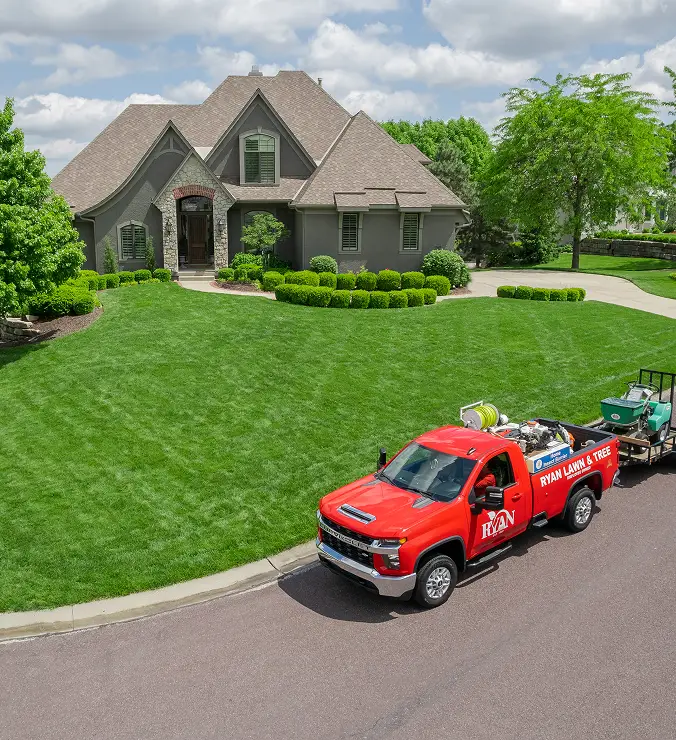
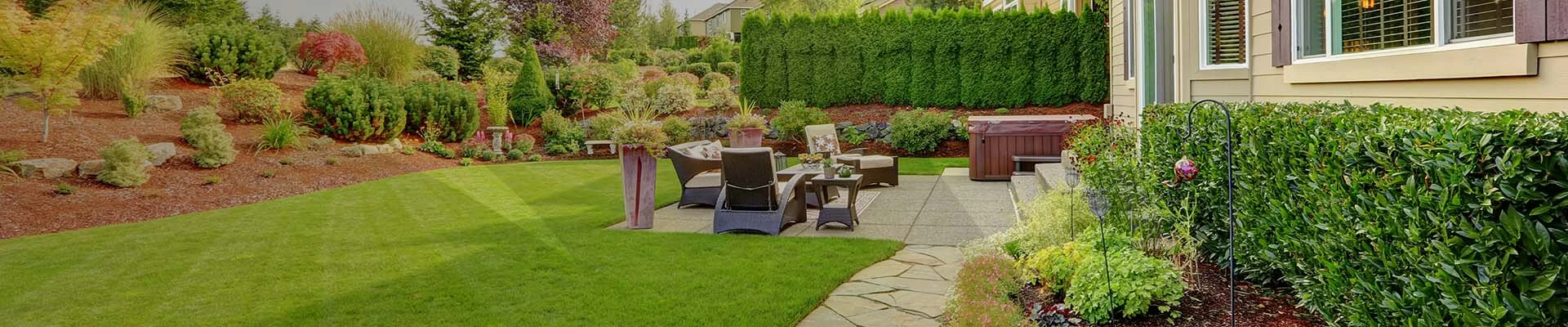
Your lawn is more important than you think; it’s actually working to improve our environment. In addition to making our homes more inviting and providing a soft play area for our children, a properly maintained lawn improves air quality, water quality, and increases curb appeal. All the more reason why we are proud to offer local lawn care services in Lawrence, KS, Wichita, Springfield, the Kansas City metro and multiple cities throughout the midwest like Tulsa, OK.
Improving Air Quality
Lawns improve the air we breathe. One way it does this is through a cooling effect produced from photosynthesis. Properly mowed, fertilized, and watered turf grass can reduce surface temperatures 30 to 40 degrees when compared to bare soil or a neglected lawn. This cooling effect reduces the need for air conditioning in the summer months, which could save you money on your electric bill.
Like trees and other plants, grass takes in carbon dioxide and releases oxygen. A patch of grass just 50 feet by 50 feet generates enough oxygen to meet the needs of a family of four. In addition to providing oxygen, grass absorbs dust and dirt from the air, giving us cleaner air to breath. Just one acre of grass will absorb hundreds of pounds of sulfur dioxide from burning fossil fuels each year.
Improving Water Quality
It is well known that rain contains pollutants. When rain falls into the street, the water collects in storm drains and enters our water system, as do the pollutants. When rain falls on our lawns, it drops down into the thatch layer — a layer of living and dead stems, leaves and roots, which is found in between the top layer of grass and the soil underneath. Once the water enters the thatch layer, pollutants are broken down by millions of microbes that live there naturally. Thus, rain that is filtered through your lawn is much cleaner than rain that falls onto concrete and other hard surfaces.
Brian Horgan, Ph.D., a professor at the University of Minnesota and extension turf grass specialist, did a study on water retention in fertilized and unfertilized lawns. He found that a fertilized lawn provides the density for your grass and soil to retain rain water. This rainwater is then brought to the thatch layer where pollutants are removed. Any runoff from these lawns is considerably cleaner. The unfertilized lawn had significantly more runoff and it contained higher levels of pollutants. How much cleaner is the water from the well-maintained lawn?
Studies at Penn State have shown that water runoff as well as water, which drained through the soil just two days after a chemical application, was usually cleaner than the government standards for drinking water.
Curb Appeal
A well-maintained lawn also provides curb appeal and protects the investment you have made in your home. A recent Gallup Survey reported that a beautiful, well-maintained lawn and landscape adds 15 percent to a home’s value according to buyers. Realtors also note that the first impression of the outside or “curb view” of a property is very important.
Not only does a nice lawn look good to neighbors and potential home buyers, it also looks good for you. There’s nothing better than coming home to a well-manicured lawn.
Well-maintained lawns play an important role in our environment. They improve air and water quality and add curb appeal to our homes. This article contains just a few of the many benefits of lawns. The next time you step outside and take a deep breath of fresh air, thank your lawn!